- The quick answer
- Calisthenics cost at a glance
- Tier 1: Free calisthenics ($0)
- Tier 2: Budget home setup (~$25–$130)
- Tier 3: Full home setup (~$250–$450)
- Tier 4: Gym membership or coaching
- Other costs: chalk, grip care and apparel
- Ways to save money
- Sample starter shopping list
- Frequently asked questions
- The bottom line
The quick answer
Starting calisthenics can cost $0. Your body is the equipment, and a floor, a sturdy table and a public park cover the first few months of training. Most people who stick with it end up spending money in stages:
- Free: $0 (bodyweight at home plus outdoor parks)
- Budget home setup: roughly $25–$130 (a doorway pull-up bar, maybe bands)
- Full home setup: roughly $250–$450 (bar, rings, parallettes, bands, chalk and a few small extras)
- Gym or coached: roughly $15–$95 a month for a membership, plus about $60–$150 a session if you hire a coach
All prices in this guide are in Canadian dollars, before tax, and were checked in October 2026. Prices change often, so treat them as a guide and check before you buy.
Calisthenics cost at a glance
| Tier | Upfront cost | Ongoing cost | What you get | Best for |
|---|---|---|---|---|
| Free | $0 | $0 | Floor, chair or table, outdoor park bars | Total beginners testing the waters |
| Budget home setup | ~$25–$130 | $0 | Doorway pull-up bar, resistance bands | Building the basics at home |
| Full home setup | ~$250–$450 | Chalk/tape refills | Bar or power tower, rings, parallettes, bands, chalk | Training skills year-round at home |
| Gym or coached | $0–$60 join fee | ~$15–$95/month gym; ~$60–$150/session coaching | Bars, space, community, expert feedback | People who want structure or faster progress |
We’ll break down each tier below, then go category by category so you know where your money actually goes.
Tier 1: Free calisthenics ($0)
This is where we tell everyone to start. Push-ups, squats, lunges, planks, glute bridges, pike push-ups and hollow holds need nothing but floor space. Add a sturdy table for inverted rows and two chairs for assisted dips, and you’ve covered pushing, pulling, legs and core.
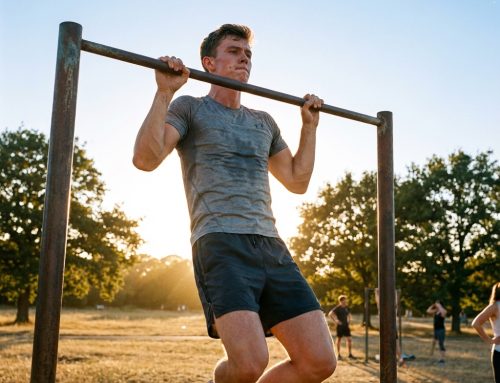
For pulling, a park is your best friend. Playground monkey bars and outdoor fitness areas give you a free pull-up bar and often dip bars too. Here in Windsor, the city opened a new outdoor fitness area at Gateway Park in west Windsor in August 2026, and most Canadian cities have similar free stations. Check your city’s parks page for “outdoor fitness equipment.”
The only real cost at this tier is time spent learning. Our beginner’s guide to starting calisthenics and how to start calisthenics training walk you through your first exercises, and if you need help keeping the habit going at home, read staying motivated to work out at home.
Free programs help too. Our Full Body Bi-Weekly Training Plan, Calisthenics Workout Planner Template and 50 Calisthenics Challenges are all $0.
The catch: Canadian winters. Outdoor bars are icy, snowy or just miserable for several months a year, which is the main reason most people move to tier 2.
Tier 2: Budget home setup (~$25–$130)
If you buy one thing, make it a pull-up bar. Pulling is the hardest movement to train without equipment, and a bar unlocks pull-ups, chin-ups, dead hangs and hanging knee raises.
- Doorway pull-up bar: On Walmart.ca, basic doorway bars run from about $24 (GoZone) to $31–$38 for popular models from Sunny Health & Fitness and Iron Body Fitness. Fancier multi-grip doorway trainers can hit $100.
- Resistance bands: Bands make pull-ups and dips easier while you build strength, and they’re great for warm-ups. Our Resistance Bands are $43.99. Our guide on how to use resistance bands shows how to get the most from them.
A bar plus a set of bands lands around $70–$80 and covers almost every beginner exercise. Before you buy a doorway bar, check your door frame. Some trim can’t take the load, and a cheap bar is not worth a damaged frame.
Tier 3: Full home setup (~$250–$450)
Once you’re consistent, a few more pieces open up the skill side of calisthenics: dips, L-sits, handstand work, ring rows and eventually muscle-ups.
- Gymnastics rings: The most versatile piece of gear you can own. Hang them from a pull-up bar, a beam or a tree and you get rows, dips, push-ups, support holds and more. Our Gymnastics Rings are $84.99. For comparison, Rogue’s wood rings are $144 on Rogue Canada (US$105 in the US). Not sure which material to pick? See wooden vs plastic vs metal gymnastics rings.
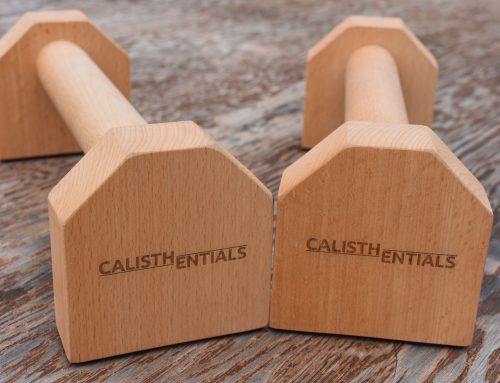
- Parallettes: Easier on the wrists than the floor for push-ups and L-sits, and essential for planche and handstand progressions. Our Parallettes are $84.99. If you’re deciding between the two, read gymnastics rings vs parallettes.
- Dip station or power tower: Freestanding dip stations on Walmart.ca run about $75–$140, and power towers (pull-up bar, dip bars and knee-raise station in one) about $110–$200. A power tower can replace a doorway bar if your frames won’t work.
- Ab wheel: A cheap, brutal core tool. Our Ab Wheel is $39.99.
- Mat: Handy for floor work and handstand practice. A standard yoga mat like the Yoga Warrior II is $54.70 on Walmart.ca.
A realistic full setup is a doorway bar (~$30), rings ($84.99), parallettes ($84.99), bands ($43.99) and chalk ($21.99), which comes to about $267. Add a power tower instead of a doorway bar, or an ab wheel and mat, and you’re closer to $400–$450. That’s less than half a year at many mid-range gyms, and you own it.
Tier 4: Gym membership or coaching
Gym memberships in Canada
A gym is worth it if you want pull-up bars, dip stations and space in winter, or you just train better around other people. Here’s what the big chains list:
- Planet Fitness: Classic is $15/month and Black Card is $29.99/month, plus a $49 annual fee.
- Fit4Less: $7.99 every two weeks (one location) or $13.99 every two weeks (all locations), plus a $49.99 annual fee. Billed bi-weekly, that’s about $17 and $30 a month.
- GoodLife Fitness: Prices vary by club, but recent listings put Essential at $38.99 bi-weekly (about $84/month) and Ultimate at $42.99 bi-weekly (about $93/month), with join fees up to $59.99.
- Climbing gyms: Not a calisthenics gym, but full of pull-up rigs, hangboards and strong-fingered people. Adult day passes in Ontario run about $24–$31.
Watch out for bi-weekly billing. It means 26 payments a year, not 24, so “$7.99” or “$38.99” costs more per month than it looks. Before you sign, check the gym actually has a solid pull-up bar and dip station. Some budget gyms are machine-heavy.
Coaching and programs
A coach costs more, but it’s the fastest way to fix your form and stop guessing. Canadian personal training typically runs about $60–$150 per session, depending on the city and whether it’s in-home or at a gym.
Calisthenics-specific coaching is harder to find locally, which is why online coaching is popular. Our 1-on-1 Virtual Coaching Session is $113.99. If you’re not sure you need it yet, we wrote a whole post on when to consider calisthenics coaching. Many people do well with a free program for months and only book a session once they hit a plateau on a skill.
Other costs: chalk, grip care and apparel
These are the small extras that add up over time:
- Chalk: Keeps your grip dry on bars and rings. Our Calisthenics Chalk is $21.99.
- Finger tape and wrist support: Helpful once volume goes up. Our Athletic Finger Tape is $21.99 and our Wrist Wraps are $32.99. Neither is needed on day one.
- Clothing: Anything you can move in works. You don’t need special gear to start. If you’d like training clothes that suit the sport, our shirts run $35.99–$58.99, hoodies $84.99–$113.99 and joggers $84.99.
- Shoes: Most calisthenics is done barefoot or in whatever trainers you already own.
Ways to save money
- Start free and buy gear only when it fixes a real problem. If you can’t train pulling, buy a bar. If your wrists hurt on the floor, get parallettes.
- Use the park in summer, home gear in winter. You may never need a membership.
- Pick versatile gear first. Rings and a bar cover more exercises per dollar than almost anything else.
- Buy once, buy well. A wobbly dip station or a cheap bar that slips is money wasted and a safety risk.
- Do the bi-weekly math and negotiate the join fee. Join fees are often discounted or waived during promotions.
- Use free programs before paying for coaching. Then pay for coaching when you know what you need help with.
Sample starter shopping list
Here’s what we’d buy, in order, if we were starting from zero:
| Order | Item | Approx. price (CAD) | Why |
|---|---|---|---|
| 1 | Free program (e.g. Full Body Bi-Weekly Training Plan) | $0 | Structure from day one |
| 2 | Doorway pull-up bar | ~$24–$38 | Unlocks pulling |
| 3 | Resistance bands | $43.99 | Assisted pull-ups and dips |
| 4 | Gymnastics rings | $84.99 | Rows, dips, push-ups, support work |
| 5 | Parallettes | $84.99 | Wrist-friendly push-ups, L-sits |
| 6 | Chalk | $21.99 | Better grip as you progress |
Items 1–3 cost under $85 and are enough for your first few months. Items 4–6 bring the total to about $265–$280.
Frequently asked questions
The bottom line
Calisthenics is one of the cheapest ways to get strong. You can start today for nothing, and for most people a pull-up bar and some bands under $85 is all they need for months. Build up to rings and parallettes when you’re ready, and only pay for a gym or a coach when it clearly solves a problem for you.
Ready to start? Grab our free Full Body Bi-Weekly Training Plan and get your first session in this week.

Gear for this workout

Original price was: $40.99.$32.99Current price is: $32.99.
20% Off
76 in stock