The debate between gymnastics rings or parallettes has sparked countless arguments in calisthenics communities, and honestly, most of the advice out there misses the point entirely. People treat these tools as interchangeable when they’re different training methods. I’ve trained on both for years, watched athletes progress on each, and the reality is more nuanced than “just pick one.”
What matters when choosing between rings and wooden parallettes is your training goals, injury history, available space, and where you are in your calisthenics journey. A beginner chasing their first L-sit has different needs than an advanced athlete working toward an iron cross. Someone training in a cramped apartment faces constraints that a garage gym owner doesn’t. The rings or parallettes question isn’t about which tool is objectively better. It’s about which tool serves your specific situation right now.
Both pieces of equipment have earned their place in serious training programs. Rings have been the gold standard in gymnastics for over a century. Parallettes emerged from the floor work tradition and have become essential for static strength development. Understanding exactly how each one challenges your body differently will help you make a decision that actually accelerates your progress instead of holding it back.
Core Differences in Training Mechanics
The fundamental distinction between these two tools comes down to how they interact with physics and your nervous system. This isn’t just academic theory. It directly affects your training results.
Stability vs. Instability
Rings are inherently unstable. They hang from straps and move freely in space, which means your stabilizer muscles work overtime during every single rep. A basic ring support hold that looks simple will have your entire shoulder girdle firing to prevent the rings from drifting apart. This instability creates a unique training stimulus that parallettes simply cannot replicate. Even in dragon variations!
Parallettes sit firmly on the ground. They don’t wobble, drift, or rotate unexpectedly. This stability lets you focus entirely on the primary movement pattern without dividing your attention between balance and strength. For learning complex skills like the planche or handstand push-ups, this focused environment often accelerates progress because you’re not fighting the equipment while learning the movement.
The practical difference shows up immediately in training. Most people can do significantly more dips on parallettes than on rings. That gap represents the neural and muscular resources devoted to stabilization rather than raw pushing power. However, the stability difference is emphasized for skills where users are above the rings.
Fixed Position vs. Free Rotation
Rings rotate freely, allowing your hands to turn naturally throughout movements. During a ring dip, your hands might start neutral and rotate slightly outward at the bottom. This freedom often feels more comfortable for joints because you’re not locked into a fixed wrist position.
Parallettes keep your hands in a consistent position throughout every rep. Your wrists maintain the same angle from start to finish. For some people, this consistency feels limiting. For others, especially those with previous wrist injuries, the predictability is exactly what they need.
The rotation factor also affects muscle recruitment. Ring push-ups allow you to rotate your hands outward at the top, increasing chest activation. Parallette push-ups hit a consistent angle throughout, which some athletes prefer for building specific strength patterns.
The Case for Gymnastic Rings
Rings deserve their reputation as perhaps the most versatile upper body training tool ever created. There’s a reason competitive gymnasts develop such impressive physiques using primarily rings.
Upper Body Hypertrophy and Stabilizer Strength
The instability of rings forces your smaller stabilizer muscles to work constantly. Your rotator cuff, serratus anterior, and deep shoulder stabilizers get hammered during every exercise. Over time, this builds a foundation of joint stability that carries over to everything else you do.
For hypertrophy specifically, rings excel because they allow full range of motion without the restrictions of fixed bars. Ring dips let you go deeper than parallel bar dips. Ring push-ups let you bring your hands together at the top for a stronger chest contraction. These extended ranges under tension drive muscle growth effectively.
The time under tension during ring work also tends to be higher. When you’re fighting for stability throughout a movement, you naturally slow down. That prolonged muscle engagement creates significant metabolic stress, one of the primary drivers of muscle adaptation.
Pulling Movement Versatility
Rings are great for pulling exercises. You can perform rows at any angle from nearly horizontal to completely vertical. Pull-ups can transition into muscle-ups seamlessly. Archer pulls, typewriter pull-ups, and dozens of other variations become available with simple grip adjustments.
The ability to rotate during pulling movements also protects your elbows and shoulders. Fixed bar pull-ups lock your hands in place, which can stress joints over thousands of reps. Rings let your arms find their natural path, reducing repetitive strain injuries that plague high-volume athletes.
Face pulls, reverse flyes, and other rear delt exercises become possible with rings in ways that parallettes simply cannot replicate. For balanced shoulder development and long-term joint health, this pulling versatility matters enormously.
The Advantages of Parallettes
Parallettes might seem like the simpler tool, but they offer specific advantages that rings cannot match. For certain training goals, they’re actually the superior choice.
Mastering Static Holds and Floor Skills
The planche, L-sit, V-sit, and other static holds are dramatically easier to learn on parallettes. The stable platform lets you focus entirely on body positioning and tension without the added challenge of preventing equipment movement. This focused practice environment accelerates skill acquisition significantly.
When you’re learning to shift your weight forward into a planche lean, you need consistent feedback about your position. Parallettes provide that feedback clearly. On rings, the equipment movement can mask positioning errors or create false sensations of progress.
Floor-based skills like shoot-throughs, press handstands, and various transitions also work better on parallettes. These movements require precise hand placement and consistent support angles that only fixed equipment like parallettes can provide.
Wrist Health and Ergonomics
Parallettes elevate your hands off the ground and allow a neutral wrist position. This takes significant pressure off the wrist joint compared to floor work. For anyone with wrist mobility limitations or previous injuries, this elevation can mean the difference between training pain-free and not training at all.
The grip angle on parallettes also reduces the extreme wrist extension required for floor push-ups and handstands. Over months and years of training, this reduced stress accumulates into meaningful joint protection. Many experienced athletes credit parallettes with extending their training careers.
For high-volume pushing work, the ergonomic advantage becomes even more pronounced. Doing 100 push-ups on parallettes stresses your wrists far less than 100 floor push-ups. This allows greater training volume without the overuse injuries that sideline so many athletes.
Exercise Progression and Skill Carryover
Understanding how skills develop on each implement helps you plan your training intelligently. Some progressions work better on one tool, while others transfer between them.
Push-ups, Dips, and Planche Progressions
Basic push-up progressions work well on both implements, though they feel different. Parallette push-ups emphasize consistent positioning and allow deeper range of motion. Ring push-ups add instability that increases difficulty even at basic levels.
For planche work specifically, parallettes are the clear winner for most athletes. The stability lets you focus on the brutal shoulder strength and body tension required. Attempting planche leans on rings before you’ve mastered them on parallettes usually leads to frustration and slower progress.
Dip progressions tell a different story. Ring dips build stability and control that parallette dips cannot match. The turning out at the top of a ring dip, where you rotate your palms forward, develops shoulder strength and control that transfers to advanced skills like the iron cross.
The Muscle-Up and Vertical Pulling
The muscle-up is fundamentally a ring skill. While bar muscle-ups exist, the ring version is smoother and more accessible for most people. The free rotation allows a natural transition from pull to dip that fixed bars make awkward.
Vertical pulling progressions like pull-ups and chin-ups obviously require rings since parallettes are floor-based implements. For anyone prioritizing pulling strength, rings become essential rather than optional.
The false grip, a prerequisite for strict muscle-ups, can only be developed on rings. This specific wrist position during hanging work has no parallette equivalent. Athletes targeting the muscle-up need rings in their training regardless of their other equipment choices.
Space, Portability, and Setup Requirements Of Both Rings & Parallettes
Practical constraints often determine equipment choices more than training theory. Both tools have distinct logistical profiles worth considering.
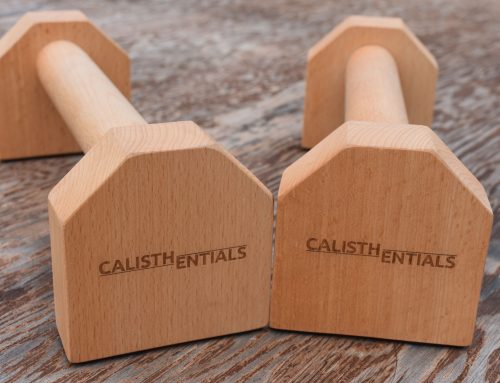
Parallettes are compact, lightweight, and require zero installation. A quality pair fits in a gym bag and can be used anywhere with a flat surface. Hotel rooms, parks, small apartments, and office spaces all work fine. Setup takes literally seconds, and storage requires minimal space.
Rings need something sturdy to hang from. This might be a pull-up bar, tree branch, power rack, or dedicated ceiling mount. The setup takes longer, and finding appropriate hanging points while traveling can be challenging. However, rings pack smaller than parallettes since they’re just the handles and straps.
For home gyms, rings typically require more vertical space and ceiling height. Low ceilings make ring dips and muscle-ups impossible. Parallettes work in any room where you can lie down, making them more accessible.
Choosing Based on Your Fitness Goals
The right choice depends heavily on what you’re actually trying to accomplish. Different goals point toward different equipment.
Best for Beginners and Home Gyms
Beginners often benefit from starting with parallettes. The stability allows focus on fundamental movement patterns without the added complexity of fighting unstable equipment. Learning proper push-up form, building L-sit strength, and developing basic pressing power all work well on parallettes.
Home gyms with limited space or no overhead anchor points should prioritize parallettes. You can get an excellent upper body workout with just parallettes and floor space. Adding rings later when you have appropriate setup options makes sense.
If you can only buy one tool and have somewhere to hang rings, that’s probably the better long-term investment due to their versatility. But if your training space is limited, parallettes deliver tremendous value in a compact package.
Best for Advanced Calisthenics Athletes
Advanced athletes typically need both implements. The specific demands of high-level skills require the unique benefits each tool provides. Planche training happens on parallettes. Muscle-up work happens on rings. Iron cross progressions require rings. Press handstands work better on parallettes.
For athletes specifically targeting static strength skills like the planche, maltese, or Victorian, parallettes become the primary training tool. The stability requirement for these positions makes rings impractical until the skills are already strong.
Athletes focused on dynamic skills and ring-specific movements like the iron cross or muscle-up obviously need rings as their primary implement. The instability training also builds joint resilience that protects against injuries during high-level work.
Making Your Decision Between Rings And Parallettes
The rings or parallettes debate doesn’t have a universal answer because the question itself is incomplete. The real question is: which tool serves your current goals, space, and training level best right now?
Most serious calisthenics athletes eventually own both. They’re complementary tools that address different aspects of bodyweight training. If budget forces you to choose one, consider your primary goals and practical constraints. Pulling-focused athletes need rings. Static strength enthusiasts should start with parallettes and move to rings as they become more advanced. Limited space points toward parallettes. Access to a good hanging point makes rings viable.
Whatever you choose, commit to learning it properly before adding complexity. Six months of focused parallette training builds more strength than six months of bouncing between implements without direction.
If you’re ready to invest in quality equipment that supports serious training, Calisthentials offers carefully selected calisthenics gear designed for athletes at every level. To learn more about calisthenics training checkout our bodyweight fitness blog.