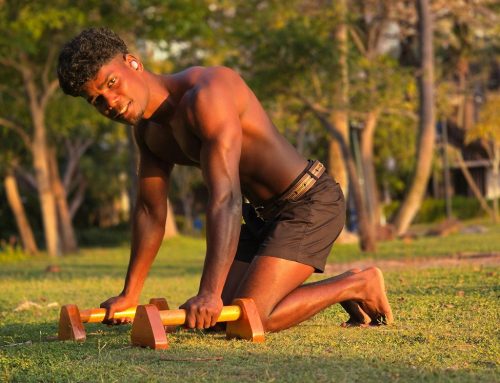
Most people grab the cheapest and thinnest parallettes they can find, assuming a smaller diameter means a tighter grip and better control. That instinct is wrong. After years of watching calisthenics athletes plateau on skinny p-bars and then break through once they switched to a thicker grip, I can tell you the diameter of your parallettes matters when first unlocking intermediate and advanced calisthenics skills. Thick parallettes change how force travels through your hands, how your wrists align under load, and how many muscle fibers actually fire during a hold.
They’re not just a preference: they’re a training advantage. If you’ve been stalling on your L-sit, struggling with handstand stability, or dealing with nagging wrist pain after planche sessions, the fix might be simpler than overhauling your program. It might just be swapping your parallettes. This article breaks down exactly why a wider grip diameter produces better results for most athletes, from raw ergonomics to skill progression, and helps you figure out the right size for your goals.
The Ergonomic Advantages of Why Thicker Parallettes Are Better
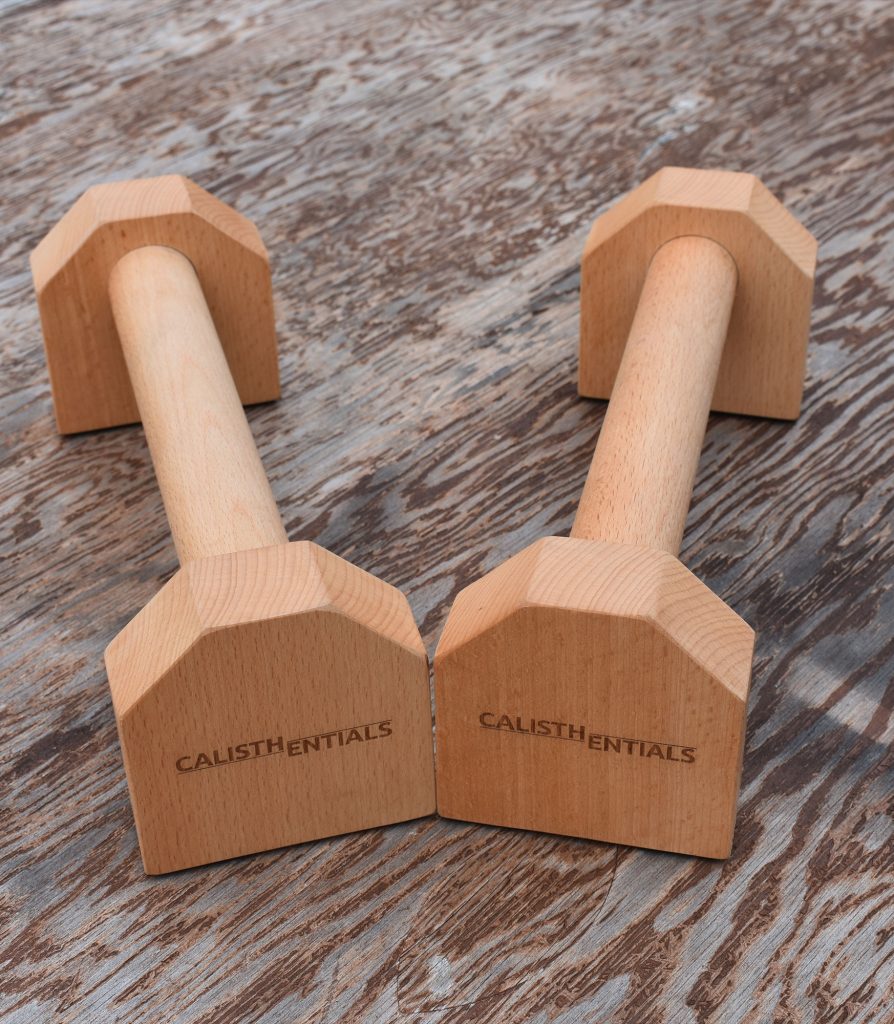
The single biggest reason calisthenics athletes quit or take extended breaks isn’t a lack of motivation. It’s injury, and wrist problems sit near the top of that list. Your wrists are small, complex joints forced to bear your entire bodyweight during pushing work. The diameter of the bar you grip determines how that load gets distributed, and thin bars concentrate force in all the wrong places.
A thicker bar allows your hand to wrap around it in a more neutral position. Instead of your fingers curling tightly into a fist-like grip, they spread wider, which opens the carpal tunnel and reduces the acute flexion angle at the wrist. Think of it like the difference between gripping a pencil and gripping a coffee mug: the mug lets your hand relax into a more natural position.
Reducing Wrist Strain and Compression
When you grip a thin bar, typically anything under 30mm in diameter, your fingers overlap or nearly touch your palm. This forces the wrist into deep flexion, compressing the median nerve and the small bones of the carpus. Over hundreds of reps and hours of holds, that compression adds up. You start feeling tingling, stiffness, or sharp pain at the base of the palm.
A bar in the 38-50mm range keeps the wrist closer to a neutral angle. The joint stays stacked rather than kinked, and the tendons running through the carpal tunnel have more room. Physical therapists have been recommending fat-grip tools for rehabilitation for years, and the principle applies directly here. If you’re doing elbow levers, planche leans, tuck planches, or extended L-sit holds, your wrists are under sustained load. Reducing the flexion angle even by 10-15 degrees can be the difference between a sustainable practice and chronic tendinitis.
Optimizing Weight Distribution Across the Palm
Thin bars create pressure hotspots. Your bodyweight channels through a narrow line of contact across the palm, usually right at the base of the fingers. Over time, this leads to calluses, bruising, and sometimes nerve irritation that radiates into the fingers.
Thicker parallettes spread that same load across a wider surface area. More of your palm makes contact with the bar, distributing force more evenly. The meaty part of the palm near the thumb (the thenar eminence) and the outer edge (the hypothenar eminence) both share the work. This isn’t just about comfort: better weight distribution means better proprioceptive feedback. You can feel subtle shifts in balance more clearly when the contact patch is larger, which directly improves your ability to make micro-corrections during holds.
Thicker Parallettes Enhance Grip Strength and Muscle Activation
Here’s something most people don’t realize: a thicker grip doesn’t just change your hand position. It changes how hard your entire upper body works. The physics are straightforward. A wider diameter requires more grip force to maintain the same hold, and that increased demand cascades through the forearm, upper arm, and shoulder girdle.
This isn’t a disadvantage. It’s a training stimulus that thin bars simply can’t provide. If your goal is building real, transferable strength for calisthenics skills, you want your body working harder, not finding shortcuts. Thick parallettes force that extra work in a way that carries over to everything from muscle-ups to ring work.
How a Wider Grip Fires More Muscles
When you grip something hard, the muscular tension radiates outward from your hand through your forearm, into your biceps and triceps, through your shoulders, and into your core. The harder you grip, the more muscles fire.
A thick bar demands a harder grip by default. You can’t casually hold a 45mm bar the way you might a 28mm bar. Your nervous system recruits more motor units to maintain that grip, and those motor units don’t stay isolated in your forearms. Your rotator cuff muscles engage more aggressively. Your scapular stabilizers fire harder to keep your shoulders packed. Even your lats activate more strongly because the increased tension signal travels through the entire kinetic chain. For skills like the planche, where total-body tension is the difference between holding and collapsing, this irradiation effect is genuinely significant.
Developing Forearm Endurance for Calisthenics
Calisthenics is a sport of time under tension. An L-sit hold might last 15-30 seconds. A handstand practice session involves minutes of cumulative grip work.
Training on thicker bars builds that endurance faster because the metabolic stress on the forearm flexors and extensors is higher per unit of time. You’re essentially doing grip training and skill training simultaneously. Athletes who switch to thick parallettes often report that when they return to standard-diameter bars or rings, everything feels almost effortless. Their grip endurance has a surplus they didn’t have before. That surplus translates directly to longer holds, more consistent sets, and the ability to focus on technique rather than fighting a failing grip.
Increased Stability: Why Thicker Parallettes Are Better for Balance
Balance on parallettes isn’t just about core strength or shoulder control. It starts at the point of contact between your hands and the bar. A wider bar gives you more to work with, literally, and that changes the stability equation in your favor. This is especially true for skills where small balance corrections happen constantly, like freestanding handstands or press-to-handstand transitions.
Creating a Larger Contact Surface for Handstands
During a handstand on parallettes, your hands are your feet. Every balance correction happens through finger pressure, palm shifting, and wrist adjustments. On a thin bar, the contact surface is a narrow ridge, and your corrections are limited to squeezing harder or lighter with your fingertips.
On a thick bar, the contact surface wraps around a larger circumference. Your fingers, palm, and even the heel of your hand all contribute to balance control. Think of it like the difference between balancing on a tightrope versus a balance beam: the wider surface gives you more room to make adjustments. For handstand practitioners specifically, this means longer hold times, less fatigue in the finger flexors, and a more intuitive sense of where your center of mass sits relative to your base of support. Athletes working toward a straddle press or full planche on parallettes will notice the stability difference within their first session on a thicker bar.
Preventing Bar Flex and Wobble During Dynamic Moves
This is a structural point that gets overlooked. Thicker bars are stiffer. A 28mm steel tube will flex noticeably under a 180-pound athlete doing swing-throughs or shoot-throughs. That flex introduces an unpredictable variable: the bar moves when you don’t want it to.
A 42mm or 50mm bar, especially one made from the same material, has dramatically higher resistance to bending. The moment of inertia of a tube increases with the fourth power of its radius, so even a modest increase in diameter produces a massive increase in rigidity. For dynamic skills like L-sit to handstand transitions, tuck jumps, or any movement with a swing component, a stiffer bar means the energy you put into the movement goes where you intend it. This is why competition-grade equipment almost always uses larger diameter tubing.
Why Thicker Parallettes Are Better for Skill Progression
Skill progression in calisthenics follows a predictable pattern: you master a basic position, then add complexity through longer holds, less favorable leverage, or dynamic transitions. At every stage, the demands on your grip, wrist, and stabilizer muscles increase. Choosing the right bar diameter from the start sets you up for smoother progression later.
Most budget parallettes ship with bars between 25-32mm in diameter. These feel fine for push-ups and basic support holds, but they become limiting once you move into intermediate territory. The sweet spot for most athletes is 35-45mm, with larger-handed individuals and heavier athletes benefiting from the upper end of that range. Some even add badminton handle wrap to add extra thickness
Transitioning from Standard Bars to Fat Grips
If you already own thin parallettes and aren’t ready to replace them, fat grip sleeves offer a temporary bridge. These rubber or silicone sleeves slide over your existing bars and add 10-15mm to the effective diameter. They’re not a perfect substitute for purpose-built thick parallettes because they can shift under load, but they let you test whether a wider grip improves your training before committing to new equipment. You can also use layers of grip tape.
The transition period typically lasts two to four weeks. Your grip will fatigue faster at first, and your hold times may drop by 20-30%. That’s normal. Your forearms are adapting to a new stimulus. Within a month, most athletes recover their previous hold times and then surpass them. The key is to reduce volume slightly during the transition rather than pushing through with the same training load. Drop your sets by about 25% for the first two weeks, then build back up. Your tendons need time to adapt, and they respond to gradual loading, not sudden spikes.
Durability and Build Quality of Oversized Bars
Thicker bars don’t just perform better: they last longer. This is simple material science. A wider tube has more material resisting the forces applied to it, which means less stress per square millimeter of metal (or wood, if you prefer wooden parallettes). The welds at the joints between the bar and the base experience lower peak stresses, and the bar itself resists denting and surface damage better.
For steel parallettes, a 42mm bar with 2mm wall thickness will outlast a 28mm bar with the same wall thickness by a significant margin, even under identical use. The thicker bar distributes impact forces over a larger area, so dropping them on concrete or clanking them together during storage causes less damage. Wooden thick parallettes, which have gained popularity for their natural grip feel, also benefit from increased diameter. A thicker dowel is far less likely to crack or splinter under load than a thin one.
From a cost perspective, thicker bars use more raw material and often cost 15-25% more than their thinner counterparts. But the extended lifespan and reduced replacement frequency make them cheaper per year of use. If you’re training seriously, four to five sessions per week, investing in a well-built set of thick parallettes pays for itself within the first year compared to replacing a cheap thin set every eight to twelve months.
Choosing the Right Diameter: Why Thicker Parallettes Are Better for You
The ideal diameter depends on three factors: your hand size, your primary training goals, and your bodyweight.
- Hand size: Measure from the base of your palm to the tip of your middle finger. Under 18cm, aim for 35-38mm bars. Between 18-21cm, 38-45mm works well. Over 21cm, consider 45-50mm.
- Training goals: If you’re focused on static strength (planche, L-sit, straddle holds), go slightly thicker for maximum irradiation and stability. If you’re doing mostly dynamic work (swing-throughs, dips, push-up variations), stay in the middle of your range for a balance between grip demand and agility.
- Bodyweight: Heavier athletes above 90kg should lean toward the thicker end regardless of hand size, because the increased structural rigidity matters more when the load is higher.
One common mistake is going too thick too fast. A 50mm bar might sound impressive, but if your hands can barely wrap halfway around it, you’ll fight the grip instead of training the skill. The bar should feel challenging to hold but not impossible. Your fingers should wrap at least 60-70% of the circumference for adequate control.
If you’re setting up a home gym in a cramped apartment, thicker parallettes do take up slightly more visual space, but the footprint difference is negligible. The base dimensions matter far more than bar diameter for storage purposes. A good pair of thick parallettes with a compact base fits under a bed or behind a couch just as easily as thin ones.
The bottom line is that thicker parallettes build stronger hands, healthier wrists, and more stable positions. They cost a bit more upfront but deliver better training results and last longer. For anyone serious about progressing through calisthenics skills, from your first tuck L-sit to a full straddle planche, a wider grip diameter is one of the simplest upgrades you can make.
If you’re ready to upgrade your setup, Calisthentials offers a solid range of calisthenics equipment built for serious training at prices that won’t empty your wallet. Whether you’re picking up your first pair of parallettes or rounding out a garage gym, it’s worth checking out our store. To learn more about calisthenics training, check out other articles on our blog.