Gymnastics rings are a fantastic tool for building strength, stability, flexibility and coordination. Whether you’re an experienced athlete or just starting your fitness journey, incorporating gymnastics ring exercises into your routine can make a huge difference. In this article, we will explore the top 5 gymnastics ring exercises for beginners.
What Are Gymnastics Rings?

Gymnastics rings are a pair of circular handles suspended from a sturdy frame above the user. They are primarily used in gymnastics, but their versatility has made them popular in various fitness disciplines, including calisthenics, CrossFit, and functional training. The rings challenge your body in ways that traditional gym equipment cannot. They require not just strength but also balance, stability, and control.
Often made out of wood or plastic, gymnastics rings can be adjusted to different heights using straps or cables. This makes them suitable for exercises ranging from basic holds to advanced movements like the front lever. The instability of the rings forces your stabilizer muscles to work in overdrive, recruiting more muscle
One of the most appealing aspects of gymnastics rings is their ability to enhance body awareness and coordination. As you perform exercises like dips, muscle-ups, pull ups, and levers, your body learns to stabilize itself in mid-air, which translates to improved performance in other physical activities. Additionally, the rings can be used for rehabilitation purposes, helping individuals recover from injuries by gradually rebuilding strength and stability in a controlled manner.
Moreover, gymnastics rings offer a wide range of exercises that can be tailored to suit any fitness level. Beginners can start with simple movements like ring rows or push-ups, while advanced users can explore complex skills such as the iron cross or front lever. Furthermore, the rings can be easily transported, making them a convenient option for outdoor workouts or travel, ensuring that you can maintain your fitness regimen no matter where you are.
Why Beginners Should Use Gymnastics Rings?

For beginners, gymnastics rings offer a multitude of benefits. One of the primary advantages is the ability to scale exercises to match your current fitness level. Whether you’re working on building strength or improving your body control, rings can be adjusted to make movements easier or more challenging. Additionally, using gymnastics rings helps to develop core stability and upper body strength simultaneously.
Moreover, gymnastics rings introduce an element of instability that forces your body to engage stabilizing muscles, which are often neglected in traditional weight training. This can lead to improved joint health and a reduced risk of injury, as your body learns to move more efficiently and with better alignment.
The portability of rings means you can take your workout anywhere, whether it’s at home, in the park, or while traveling, making it easier to stay committed to your fitness journey.
What Are The 5 Best Gymnastics Ring Exercises For Beginners?
Now that you understand what gymnastics rings are and why they’re beneficial for beginners, let’s dive into the top five exercises that will help you get started. These exercises are designed to build foundational strength and prepare you for more advanced movements down the line.
The ability to perform a wide range of movements, from basic holds to dynamic swings, keeps your training sessions fresh and engaging. As you master the fundamentals, you’ll have the opportunity to explore more complex skills, such as muscle-ups or iron crosses, which can be incredibly rewarding. The journey of learning on gymnastics rings not only builds physical strength but also fosters mental resilience, as you push through challenges and celebrate your progress along the way.
Ring Exercise 1: Ring Support Hold

The ring support hold is a fundamental exercise that builds strength in your shoulders, chest, and core. To perform this exercise, start by adjusting the rings to a height where you can comfortably grip them while standing. Jump or step into the rings, and then lift your body off the ground, holding yourself up with your arms fully extended.
Focus on keeping your body straight and your core engaged. Hold this position for as long as you can, aiming for 10 to 30 seconds. As you progress, try to increase your hold time. This exercise not only strengthens your upper body but also helps you develop the stability needed for more complex movements. Additionally, the ring support hold is a great way to enhance your grip strength, which is essential for many other exercises and sports. As you hold the position, pay attention to your breathing; controlled, steady breaths can help maintain your focus and endurance during the hold.
Once you’ve gained a sufficient amount of strength, this hold will greatly improve your ring muscle ups.
Ring Exercise 2: Body Rows
Body rows are an excellent way to build back strength and improve your pulling mechanics. To perform this exercise, adjust the rings to waist height. Grab the rings with an overhand grip, lean back, and keep your body straight. Pull yourself towards the rings, squeezing your shoulder blades together at the top of the movement.
Lower yourself back down with control, and repeat. If you’re struggling to complete a full row, you can adjust the angle of your body to make the exercise easier. The more upright you stand, the easier the exercise will become. As you get stronger, you can gradually lower the rings to increase the difficulty. Incorporating body rows into your routine not only targets the upper back but also engages the biceps and forearms, making it a comprehensive upper body workout. To maximize the effectiveness of this exercise, consider adding pauses at the top of each row to further engage your muscles and enhance your strength gains.
Ring Exercise 3: Ring Dips

Ring dips are a fantastic exercise for developing triceps and chest strength. Start by adjusting the rings to a height where your feet can clear the ground when you’re in the starting position. Grip the rings and lower your body by bending your elbows until your upper arms are parallel to the ground. Push back up to the starting position.
For beginners, it may be helpful to keep your feet on the ground or use a box for support as you build strength. Aim for 5 to 10 repetitions, focusing on maintaining control throughout the movement. As your strength improves, you can perform the dips with your feet off the ground, increasing the challenge. Ring dips also require significant shoulder stability, making them an excellent choice for enhancing overall shoulder health. To further challenge yourself, consider adding a weighted vest or performing explosive dips, where you push off the rings with enough force to momentarily lift your hands off the rings at the top of the movement. This would be weighted calisthenics training.
These may feel extremely difficult at first, but with consistent training,g your muscles will quickly adapt and recruit more stabilizer muscles.
Ring Exercise 4: Pull Ups
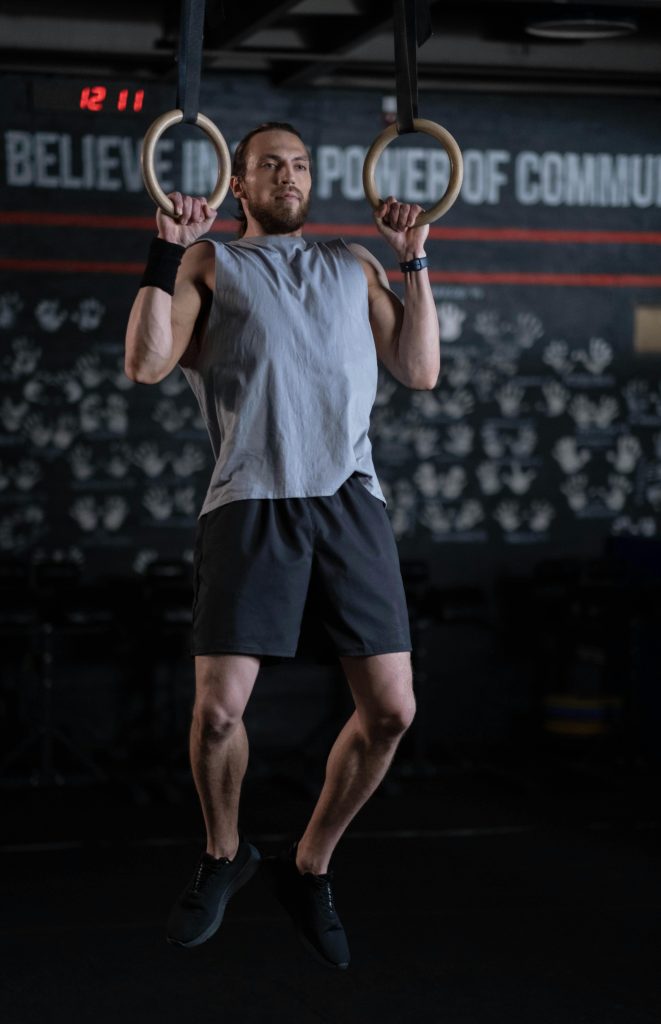
Pull-ups are a classic exercise that builds upper body strength, and performing them on gymnastics rings adds an extra layer of difficulty. Set the rings to a height where you can hang with your arms fully extended. Grip the rings with an overhand grip and pull your body upward until your chin is above the rings.
If you’re new to pull-ups, consider using a resistance band for assistance or performing negative pull-ups, where you jump to the top position and slowly lower yourself down. Aim for 3 to 5 pull-ups, gradually increasing your repetitions as you gain strength. This exercise not only targets your back and biceps but also engages your core for stability. To further enhance your pull-up routine, you can experiment with different grip variations like the false grip.
Ring Exercise 5: Ring Plank Holds
Ring plank holds are an excellent way to challenge your core stability while engaging your shoulders and arms. To perform this exercise, set the rings to a low height and get into a plank position with your hands on the rings. Keep your body straight from head to heels, engaging your core to maintain stability.
Hold this position for as long as you can, aiming for 20 to 60 seconds. As you build strength, you can experiment with different variations, such as lifting one leg off the ground. This exercise not only strengthens your core but also improves your overall body control. Try alternating between a plank hold and a push-up position, which will engage your chest and triceps while maintaining core tension, providing a comprehensive workout for your upper body and core.
Want To Learn More About Calisthenics And Gymnastics Ring Training?
If you’re excited about incorporating gymnastics rings into your fitness routine, there are plenty of resources available to help you dive deeper into calisthenics and ring training. Remember, the journey of mastering gymnastics rings is not just about strength; it’s about enjoying the process and celebrating your progress along the way. With dedication and effort, you’ll soon find yourself mastering more advanced movements. It’s important to focus on building a strong foundation first, using these 5 exercises to prepare your body for more complex skills. Additionally, incorporating flexibility and mobility work into your routine will enhance your overall performance on the rings. As you progress, you might find yourself not only improving your strength and coordination but also developing a greater sense of body awareness and control, which can translate into other areas of fitness and daily life.
To learn more about beginner gymnastics ring exercises and other aspects of fitness, check out our calisthenics blog.