Most people grab a pull-up bar the same way every single time. Shoulder width, overhand, done. And honestly, that works fine if your only goal is to check “pull-ups” off your workout list. But if you’ve ever wondered what changing your grip width actually does to your pull-ups, you’re asking a question that most gym-goers never bother with, and it’s one that can reshape your training results. The distance between your hands on that bar changes which muscles fire hardest, how much range of motion you get, how your joints handle the load, and even how many reps you can grind out. A two-inch shift in hand placement can mean the difference between building a wide back and building thick arms, or between pain-free training and a nagging shoulder problem. Whether you’re chasing your first muscle-up, trying to build a bigger back, or just looking to keep your shoulders healthy for the long haul, understanding pull-up grip width is one of the simplest adjustments you can make with the biggest payoff.
What Different Pull Up Grips Do
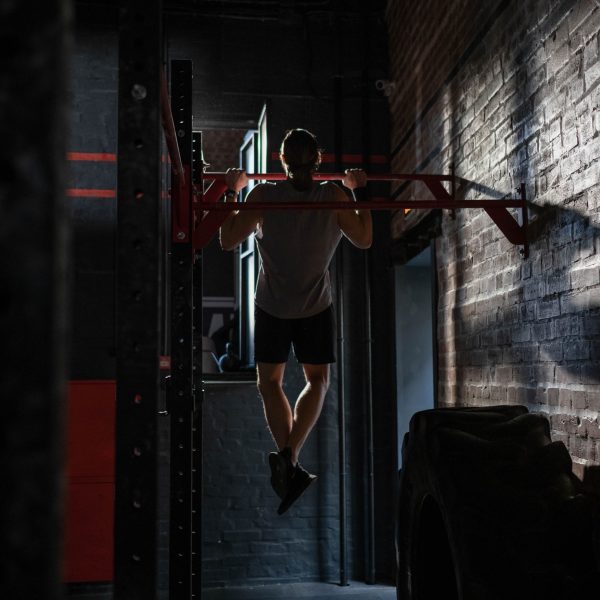
Your grip width determines the mechanical environment your body works in during every rep. Think of it like this: a wide grip creates a shorter, more vertical pulling arc, while a narrow grip creates a longer, more diagonal one. These aren’t just minor geometric differences. They fundamentally change which joints are doing the heavy lifting and how much work each muscle group contributes.
Three primary grip widths matter here: narrow (hands inside shoulder width), standard (hands at shoulder width), and wide (hands well outside shoulder width). Each one shifts the angle of your upper arm relative to your torso, which changes the demands on your shoulders, elbows, and wrists in distinct ways. Your scapular stabilizers, the muscles that control your shoulder blades, also respond differently depending on how far apart your hands sit.
Range of Motion and Joint Angles Of Each Pullup Grip
A narrow pullup grip gives you the most total range of motion. Your elbows travel through a larger arc, and your chin clears the bar with more distance to spare because your hands aren’t blocking the path. EMG studies consistently show that this longer range of motion means more total time under tension per rep, which matters for hypertrophy.
A wide grip shortens your range of motion significantly. Your elbows don’t flex as much, and your upper arms stay more abducted (out to the sides). You’re essentially pulling through a smaller window, which means each rep takes less time but places more concentrated stress on the shoulder joint. The glenohumeral joint sits in a more externally rotated position at the top, which is worth paying attention to if you have any shoulder history.
Standard grip sits in the middle. It gives you a comfortable balance of range of motion and joint-friendly positioning, which is exactly why it’s the default for most people.
Force Production and Leverage Points
Your ability to produce force changes with grip width because of how your muscles’ length-tension relationships shift. At a narrow grip, your biceps and brachialis are in a stronger position through most of the pull. Your lats still work hard, but they’re pulling from a more stretched position, which can feel harder at the bottom of the rep.
Wide grip pull-ups put your lats in a mechanically advantageous position for the initial pull off the bottom, but your biceps work at a disadvantage because of the increased elbow angle. This is why most people can do fewer wide-grip reps than standard-grip reps: the biceps fatigue faster when they can’t contribute as efficiently. If you’ve ever felt “stuck” at the midpoint of a wide-grip pull-up, that’s your biceps struggling with the leverage, not your back giving out.
How Changing Your Grip Width Affects Muscle Recruitment
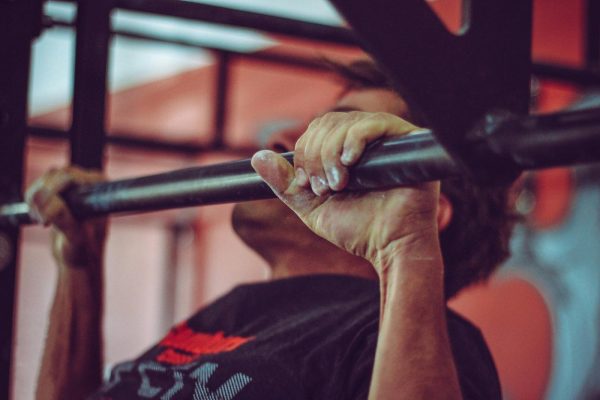
This is where things get genuinely interesting. The same exercise, the pull-up, can target meaningfully different muscle groups depending on where your hands sit. It’s not a completely different exercise, but the emphasis shifts enough to matter for programming.
A 2024 study published in the Journal of Strength and Conditioning Research confirmed what experienced lifters have known for years: grip width significantly alters the relative contribution of the lats, biceps, teres major, and pectorals during vertical pulling movements. The differences aren’t subtle, either. Some muscles see 15-25% changes in activation depending on hand placement.
Wide Grip: Targeting the Outer Pectorals
Wide-grip pull-ups increase the activation of the upper lats and teres major compared to narrower variations. The increased shoulder abduction forces these muscles to work as the primary movers, since your arms are pulling more from the sides rather than from in front.
Here’s what surprises most people: wide-grip pull-ups also recruit the sternal head of the pectoralis major more than narrow-grip versions. Your chest muscles assist with shoulder adduction (bringing your arms toward your body), and a wide grip demands more of this movement pattern. You won’t build a big chest from pull-ups alone, but the pec involvement is real and measurable.
The trade-off is that your biceps contribute less. With your forearms angled outward, the biceps can’t pull as efficiently, and more of the elbow flexion work shifts to the brachialis and brachioradialis. This is why wide-grip pull-ups feel more like a “back exercise” and less like an “arm exercise” to most trainees.
Narrow Grip: Increasing Triceps Engagement
Wait, triceps on a pull-up? This sounds wrong, but hear me out. A narrow pullup grip, especially with a neutral or supinated hand position, increases the involvement of the long head of the triceps as a shoulder extensor. The long head of the triceps crosses the shoulder joint, and during the pulling phase, it assists with bringing the upper arm down and back. It’s not doing the heavy lifting, but it’s contributing more than you’d expect.
A narrow grip also fires up the biceps significantly. With your hands close together, your forearms stay in a position that lets the biceps work through their strongest range. This is why chin-ups (narrow, supinated grip) are almost universally easier than wide-grip pull-ups: your arms can contribute more force.
The lat activation pattern shifts too. Narrow grip pull-ups emphasize the lower fibers of the lats more than wide-grip versions. If you’re training for moves like the front lever or muscle-up, where lat strength through a full range matters, narrow grip work is essential. The lower lats are critical for skills that require pulling your body through extended positions.
Safety Considerations When Changing Your Pullup Grip Width
Changing your hand placement isn’t just about performance and muscle targeting. It directly affects joint stress, and ignoring this can lead to injuries that sideline your training for weeks or months.
Shoulder Impingement Risks
Wide-grip pull-ups are the most common culprit for shoulder problems. When your hands are far apart, your shoulders sit in a position of abduction and external rotation under load. This narrows the subacromial space, the gap where your rotator cuff tendons pass under the acromion bone. If that space gets too tight, those tendons get pinched, and you develop impingement.
The risk increases when you go behind the neck with a wide grip, but even pulling to the front can cause issues if your grip is excessively wide. A good rule of thumb: if your hands are more than 1.5 times shoulder width apart, you’re entering higher-risk territory. Some people with naturally mobile shoulders handle this fine. Others develop pain within weeks.
Signs to watch for include a sharp pinch at the top of the pull-up, aching in the front of the shoulder after training, and pain when reaching overhead throughout the day. If any of these show up, narrow your grip immediately and assess before continuing.
Wrist Strain and Forearm Alignment
Your wrists take different loads depending on grip width, and this gets overlooked constantly. A very wide overhand grip forces your wrists into a slightly ulnar-deviated position, meaning they bend toward the pinky side. Under heavy load or high volume, this can irritate the wrist joint and the tendons running along the outside of the forearm.
Narrow grips are generally easier on the wrists, especially if you use a neutral grip (palms facing each other) on a set of parallel handles. This neutral position keeps the wrist in its most natural alignment, reducing strain on both the wrist and the forearm extensors. If you train on a straight bar with a narrow grip, pay attention to how your wrists feel. Some people do fine; others develop tendinitis over time.
Investing in a pull-up bar that offers multiple grip options, including neutral grip handles, gives you the flexibility to rotate between positions and keep your joints healthy over months and years of training.
Pullup Performance Gains from Changing Your Grip Width
Strategically rotating your grip width isn’t just injury prevention. It’s one of the most effective ways to break through pull-up plateaus. If you’ve been stuck at the same rep count for months, changing your hand placement can unlock new strength by training weak links you didn’t know you had.
Here’s a practical example. Say you can do 12 standard-grip pull-ups but struggle with wide-grip. That tells you your upper lats and teres major are relatively weak compared to your biceps and lower lats. Spending 4-6 weeks emphasizing wide-grip work can bring those muscles up, and when you return to standard grip, you’ll often find your numbers have jumped.
The reverse works too. If wide-grip is your default but you struggle with narrow grip chin-ups, your biceps and lower lats need attention. Training the variation you’re worst at almost always produces the biggest overall gains.
Specific Training for Powerlifting vs. Bodybuilding vs. Calisthenics
Different training goals call for different grip strategies:
- Powerlifters rarely prioritize pull-ups, but when they do, standard to slightly wide grip with added weight builds the lat thickness that supports heavy deadlifts and bench press stability. The focus is on low reps (3-5) with a controlled eccentric.
- Bodybuilders benefit from rotating through all three grip widths across their training week. Wide grip on back day for lat width, narrow grip on arm day for bicep emphasis, and standard grip for overall volume. This variation creates more complete muscular development.
- Calisthenics athletes need the most grip variety. A false grip (wrists over the bar) at shoulder width is essential for muscle-up development. Narrow grip builds the pulling strength needed for front levers. Wide grip develops the scapular control required for skills like the iron cross on rings. Cycling through these positions isn’t optional for serious calisthenics progression: it’s a core part of the programming.
For any goal, periodizing your grip width in 3-4 week blocks prevents overuse injuries and keeps your nervous system adapting to new stimuli.
Finding Your Ideal Pullup Hand Placement
There’s no single “best” grip width, but there is a best starting point for most people: hands placed just outside shoulder width, with an overhand (pronated) grip. This position balances muscle recruitment, joint safety, and force production better than any extreme.
From that baseline, adjust based on your goals and your body. If you have long arms, you may find that a slightly wider grip feels more natural because it better matches your skeletal proportions. Shorter arms often favor a narrower position. Your shoulder mobility matters too: if you can’t comfortably hang with your arms wide without pain, don’t force it.
A simple test to find your personal sweet spot: hang from the bar at different widths and note where you feel the most lat stretch without any shoulder discomfort. That’s your working width. You can train other widths for variety, but this position should be your home base.
Here’s a practical weekly rotation that works well for most intermediate trainees:
- Monday: Wide grip pull-ups, 4 sets of 6-8 reps
- Wednesday: Standard grip weighted pull-ups, 4 sets of 4-6 reps
- Friday: Narrow grip chin-ups, 3 sets of 8-12 reps
This rotation hits all the major grip widths, varies the rep ranges to target different adaptations, and gives each joint position adequate recovery time before repeating.
The question of what changing your grip width does to your pull-ups has a simple answer at its core: everything changes. The muscles you build, the joints you stress, the skills you develop, and the plateaus you break through all depend on where your hands sit on that bar. Stop defaulting to the same grip every session. Rotate intentionally, listen to your body, and watch your pulling strength transform.
If you’re looking to take your bodyweight training to the next level, check out the training programs and equipment at Calisthentials. From pull-up bars with multiple grip options to structured calisthenics programming, they’ve built their catalog around helping athletes at every level train smarter and progress faster. Shop Now and see what a few smart upgrades can do for your training.